Saving rain one drop at a time.

When the Power Goes Out… So Do the Toilets (Sometimes)
During a power outage, many people don’t realize their toilets may stop working too. Municipal water systems often rely on electric pumps, and if power is out long enough, water pressure can drop or stop entirely.
Will
3/6/20262 min read
When the Power Goes Out… So Do the Toilets (Sometimes)
Here’s something most people don’t think about until it’s too late:
Toilets need water to work.
If you’re on municipal (town) water, it’s easy to assume it will “just keep flowing.” But many water systems rely on electric pumps to maintain pressure. If the grid goes down, pressure can drop—or stop entirely—especially after the water towers empty. Even guidance from groups like FEMA and the American Red Cross emphasizes water storage for exactly this reason.
No pressure = no refill = no flush.
And that becomes a problem fast.
Toilets Use More Water Than You Think
Modern low-flow toilets use about 1.28–1.6 gallons per flush.
Older toilets can use 3–5 gallons per flush.
Do the math for a household of four over a week and you’re looking at a surprising amount of water—just for flushing.
The good news?
Flush water does NOT need to be drinking-water quality.
Separate Your Water Supply: Drinking vs. Flushing
Most preparedness advice focuses on drinking water (which is critical). But sanitation water is just as important for comfort and hygiene.
A simple system:
Store jugs or containers in the basement or garage.
Clearly label them:
“NOT FOR DRINKING – FLUSH WATER ONLY.”Use tap water to fill them ahead of time.
Rotate every 6–12 months.
You don’t need food-grade perfection for this purpose. Clean tap water stored in sealed containers is perfectly fine for flushing.
How to Manually Flush a Toilet
There are two easy methods:
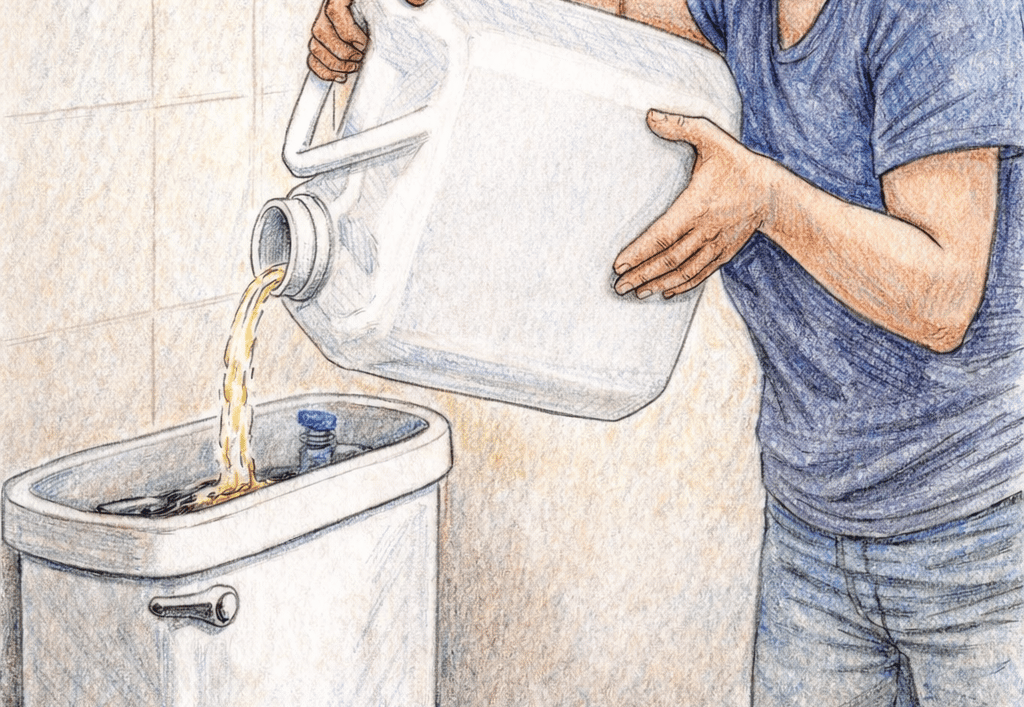
Method 1: Refill the Tank (Best Option)
Flush normally.
Remove the lid from the back tank.
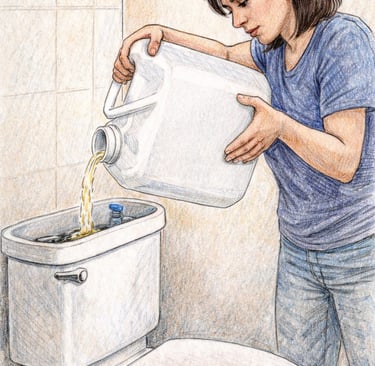
Pour water from your stored jug into the tank until it reaches the normal fill line.
Flush again as usual.
This keeps the toilet functioning just like normal.
Method 2: Bucket Flush (Quick Option)
If the tank is empty or you’re in a hurry:
Pour about 1–2 gallons of water directly into the bowl.
Pour steadily and quickly.
The toilet will siphon and flush on its own.
It’s simple—and surprisingly effective.
Why This Matters
Sanitation problems escalate quickly during disasters:
Odors
Unsanitary conditions
Increased illness risk
Stress on the household
Having dedicated flush water means:
You protect your drinking supply.
You maintain hygiene.
You avoid unnecessary panic.
And it costs almost nothing to prepare.
Practical Tip: Think in Layers
If you want to take it one step further:
Save rainwater.
Capture melted snow for flushing.
Save gray water (like cooled pasta water) for toilet use.
Again, this water doesn’t need to be drinkable—just reasonably clean.
Preparedness Is About Comfort Too
When people imagine disaster prep, they picture food and flashlights. But a working toilet during a week-long outage? That’s morale-saving.
No dramatic gear.
No survival bunker.
Just labeled jugs of water quietly waiting in the basement.
Sometimes the smartest preparedness isn’t flashy—it’s practical.
Solutions
Collect rainwater efficiently with our innovative systems.
Sustainability
Quality
info@willsgarden.com
1-508-375-3600
© 2025 All rights reserved.