Saving rain one drop at a time.

Practical Disaster Preparedness
You don’t have to believe in doomsday scenarios to admit a simple truth: the power can go out. Ice storms, hurricanes, grid failures, cyberattacks, equipment breakdowns—none of these are far-fetched.
Will
2/18/20262 min read
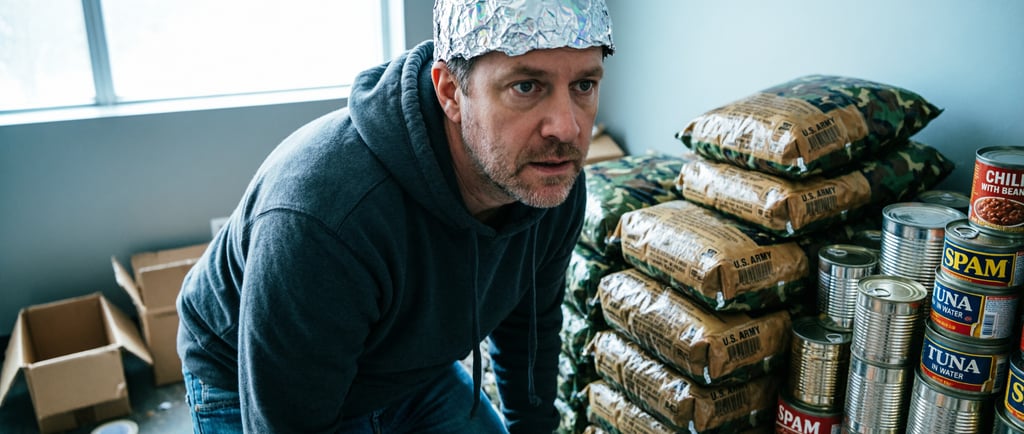
Practical Disaster Preparedness (No Tinfoil Hat Required)
You don’t have to believe in doomsday scenarios to admit a simple truth: the power can go out. Ice storms, hurricanes, grid failures, cyberattacks, equipment breakdowns—none of these are far-fetched. In fact, organizations like FEMA and the American Red Cross regularly advise households to be ready to go without electricity and normal services for several days.
But what if it’s not just a few days?
Planning for a week—or even two—without reliable power isn’t paranoia. It’s practical.
Food Storage Without the Apocalypse Vibe
When people hear “emergency food,” they often picture expensive survival buckets or military rations. Yes, you can buy MREs (Meals Ready to Eat), but they’re costly and, let’s be honest, not something most families want to eat regularly.
A smarter, more affordable strategy?
Stock what you already eat—and rotate it.
This keeps food fresh, reduces waste, and avoids the “mystery can from 2014” problem.
The Pasta Math (A Simple Example)
Unopened dry pasta typically lasts about 2 years when stored in a cool, dry place.
If your household eats pasta about once a week:
1 box per week
~50 weeks per year
That’s 50 boxes to cover a year’s rotation
Here’s how it works:
Buy 50 boxes gradually (no need to do it all at once).
Store them neatly on a shelf.
Each time you cook pasta:
Take the oldest box from the front.
Replace it with a new box in the back.
You now have roughly a year’s worth of a shelf-stable staple—without buying anything “special.” If an outage happens, you’re already prepared.
For canned goods https://amzn.to/4kQHoAI Can Dispenser Organizer can help.
Other Easy, Rotatable Staples
Think in categories:
Grains & Carbs
Rice
Pasta
Oats
Flour (rotate more frequently)
Proteins
Canned beans
Canned tuna or chicken
Peanut butter
Lentils
Shelf-Stable Add-Ons
Canned tomatoes
Pasta sauce
Broth
Shelf-stable milk
The key is simple:
If you don’t normally eat it, don’t store 100 of it.
Why Rotation Beats MREs
MREs:
Expensive per meal
Not part of your normal diet
Easy to forget about
Often wasted when they expire
Rotated pantry foods:
Affordable
Familiar
Used regularly
Automatically refreshed
You’re not building a bunker. You’re building a resilient pantry.
Beyond Food: Power Out for Two Weeks
Food is just step one. If the power goes out for an extended period, consider:
A camp stove (with safe ventilation)
Stored water (Not just for drinking, we will talk more about this in the next blog)
Battery banks (like this solar powered bank https://amzn.to/4qGk0ac )
Flashlights (not just phone lights)
A way to heat or cool safely depending on climate
You don’t need to go extreme. You just need to avoid being caught off guard.
Prepared, Not Paranoid
Preparedness isn’t about fear—it’s about margin. It’s about knowing that if something unexpected happens, your family isn’t scrambling for the last loaf of bread at the store.
No tinfoil hat required.
Just a little planning, a little rotation, and maybe 50 boxes of pasta quietly sitting on a shelf—doing their job until you need them.
If you buy something through my Amazon links, I might earn a small commission. It won’t cost you a penny more — Amazon just sends me a tiny ‘thank you’ instead of keeping it all. Coffee fund approved ☕
Solutions
Collect rainwater efficiently with our innovative systems.
Sustainability
Quality
info@willsgarden.com
1-508-375-3600
© 2025 All rights reserved.